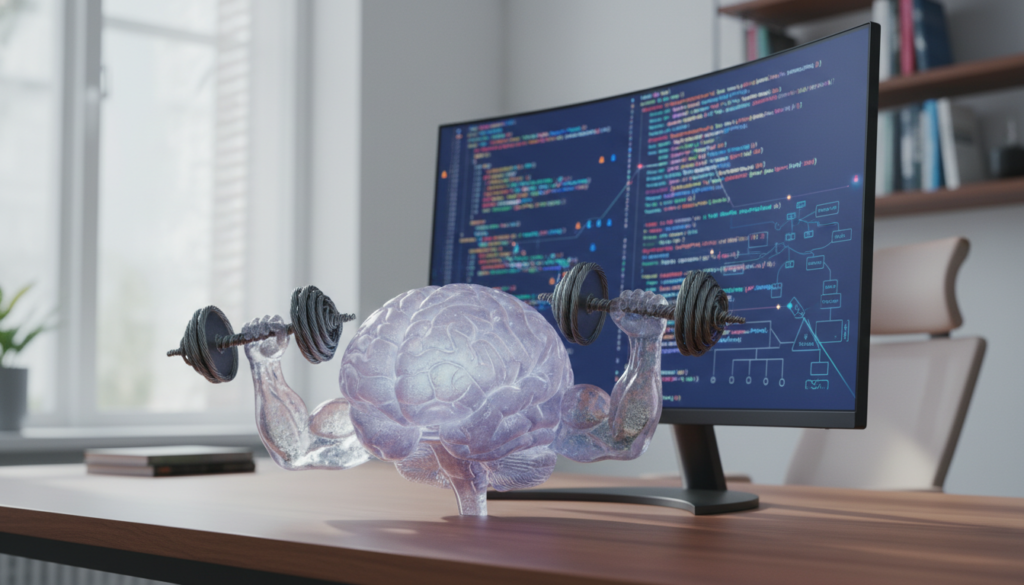
We have all been there. You open a pull request or a legacy repository, and you are met with a wall of logic so dense it looks like ancient hieroglyphics. Your first instinct? Copy, paste, and ask an LLM to explain it. While this feels like magic, there is a hidden danger. If we let the machine do all the heavy lifting, our own mental muscles start to atrophy. Technology should be a force multiplier, not a replacement for our own intellect.

The key to using these tools effectively is intentionality. If you treat an AI like a shortcut, you will eventually find yourself unable to solve problems without it. But if you treat it like a mentor, your skills will actually grow faster than ever before. This guide will show you how to maintain that balance.
The Dangerous Allure of the Instant Answer
When you ask an AI to summarize a function, it gives you a high-level overview that sounds perfectly plausible. The problem is that LLMs can be confidently wrong. If you do not understand the underlying logic, you cannot spot the hallucinations. This is where innovation meets risk. By relying on the summary, you skip the mental simulation of the code, which is exactly how you build logic skills over time.
Instead of asking for a summary, try asking for the reasoning behind specific blocks. This keeps your brain engaged in the process. You are the lead investigator, and the AI is your junior analyst. You verify everything they say. This mindset ensures that you are always the one in control of the Technology you use.
The Socratic Prompting Strategy
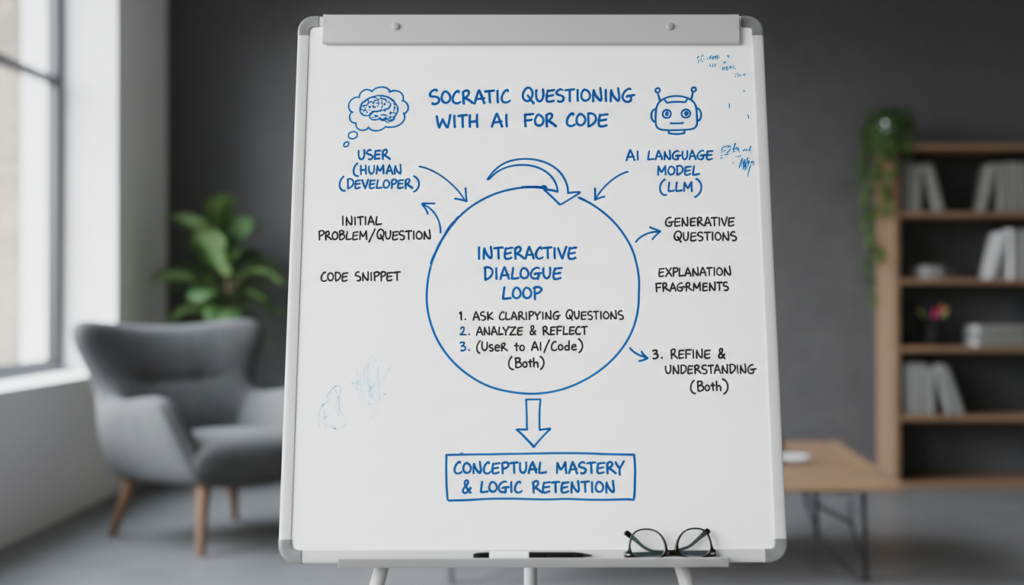
The best way to use an LLM for code explanation is to turn it into a tutor. Instead of saying, explain this code, try using prompts that force you to think. For example, ask, what are the edge cases for this logic? or can you walk me through the state changes in this loop? This keeps the cognitive load on you, ensuring that you actually learn the pattern instead of just passing through it.
This approach is a cornerstone of modern software development. You can find more insights on similar topics in our tech guides, where we explore how to balance automation with manual expertise. Using the right Guide is essential for long-term career growth.
Turning Explanations into Logic Drills
Innovation in AI tools like GitHub Copilot has changed how we write code, but reading it remains a manual skill. To keep your logic sharp, take the AI explanation and try to refute it. Ask yourself, is there a more efficient way to write this? or where would this break? By challenging the output, you are exercising your critical thinking skills.
You can also use the AI to generate unit tests for the code. Reading the tests is often a better way to understand the logic than reading a text summary. It shows you the inputs and the expected outputs, which is the purest form of logical mapping. Innovation is about using tools to deepen your understanding, not bypass it.

Verification is Your New Superpower
Whenever an LLM gives you an explanation, take one specific part and ask for the documentation. For example, if it mentions a specific library function, look it up on official documentation sites. This bridges the gap between AI-generated summaries and technical reality. It ensures your knowledge is grounded in facts, not just probabilistic guesses.
This verification process is where the real learning happens. You start to see patterns in how libraries are built and how senior developers structure their logic. Over time, you will find yourself needing the LLM less and less because you have internalized those patterns.

Integrating Innovation into Your Workflow
To really master this, you need a workflow that prioritizes your growth. Start by reading the code yourself for five minutes. Form a hypothesis. Then, and only then, use the AI to check your work. This ensures that you are always the primary driver of the logic. Think of it as a guide rather than a map. The map tells you where to go, but the guide helps you understand the terrain.

The future of Innovation is about the collaboration between human creativity and machine efficiency. If you focus on keeping your logic sharp, you will always be ahead of the curve, no matter how powerful the tools become. Stay curious, stay critical, and keep coding.