Why Traditional Networking Feels Like a Sales Pitch
We have all been there. You see a senior developer at Google or a cool founder on X (formerly Twitter) and you want their help. But your finger hovers over the send button. Is this cringe? Usually, the answer is yes. But it does not have to be. For most young tech enthusiasts between 10 and 20 years old, the idea of networking feels like putting on a suit that is three sizes too big. It feels fake, forced, and frankly, a bit desperate. But here is the secret: the best networking is not about asking for favors. It is about building a relationship where you are not just a name in an inbox, but a person with potential. If you want to learn more about starting your journey, visit our Home page.
The Cringe Factor: Why You Are Getting Ghosted
Before we dive into the how-to, let us talk about the big mistake. Most people send a DM that says something like, “Hi sir, I am a student. Please guide me.” This is the fastest way to get ignored. Why? Because it asks for everything and gives nothing. It places the entire burden of the relationship on the mentor. In this guide, we are going to flip the script and show you how to be the person that mentors actually want to talk to.

Step 1: Fix Your Digital Handshake (LinkedIn Profile)
Before you even think about reaching out, you need to look the part. Your LinkedIn profile is your digital handshake. If it looks like a ghost town, people will treat you like a ghost. You do not need twenty years of experience to have a good profile. You just need to show that you are active and learning.
The Headline is Your Hook
Stop using headlines like “Student at High School.” It is boring. Instead, use something like “Aspiring Frontend Developer | Learning React & Three.js | Building in Public.” This tells a potential mentor exactly what you are interested in and what you are currently working on. It shows movement. Mentors love to help people who are already moving.
The About Section: Your Story
Do not write this like a boring resume. Write it like a human. Tell people what sparked your interest in tech. Was it a specific game? A website you wanted to fix? A problem you saw in your community? A little bit of personality goes a long way in making you memorable. You can Learn More about how to present your tech skills on our main site.
Step 2: X (Twitter) is Your Virtual Watercooler
While LinkedIn is formal, X is where the real conversations happen in tech. This is where developers, founders, and engineers hang out and complain about bugs or celebrate new releases. This is your best chance to build a relationship without the formal pressure of a cold DM.
The Power of the Public Build
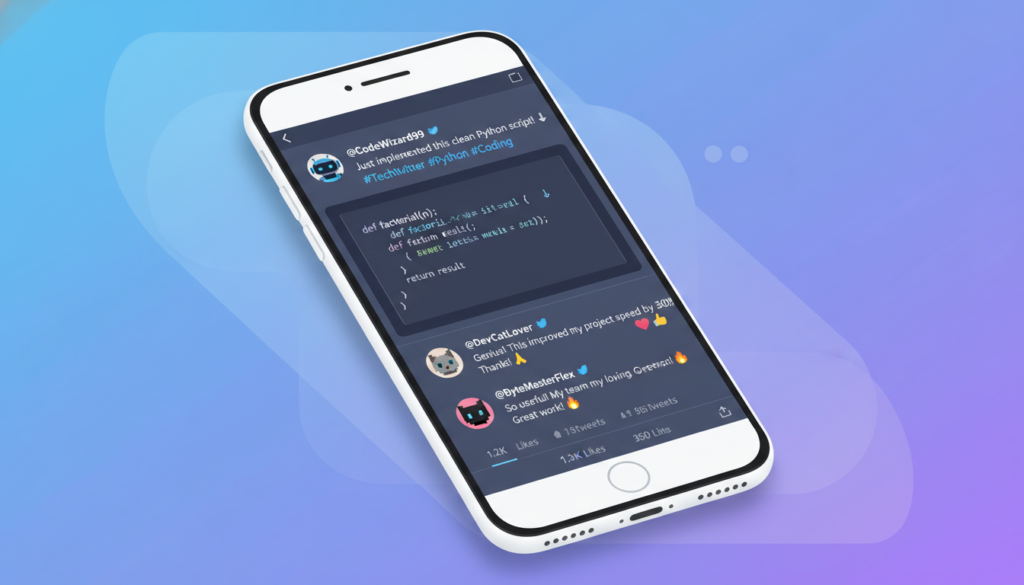
The best way to get a mentor on X is to not ask for one. Instead, “Build in Public.” Every time you learn a new CSS trick or fix a bug in your Python script, post it. Use hashtags like #100DaysOfCode. When you document your journey, you create a trail of evidence that you are a hard worker. Eventually, the mentors will start noticing you before you even say hello.
Engaging Without Being a Fanboy
Do not just reply “Great post!” to every tweet from a tech leader. That is noise. Instead, ask a thoughtful question or share a specific experience related to what they wrote. If they post about a new AI tool, try it out and reply with a screenshot of what you made. Value-add engagement is the key to unlocking the DM door later.
The Golden Rule: Engage Before You Ask
Networking is a long game. You should never send a cold DM to someone you have never interacted with. Think of it like a real-life party. You would not walk up to a stranger and ask them to teach you how to drive. You would first join the conversation, listen, and then introduce yourself.
- Like and Comment: Interact with their posts for at least a week before reaching out.
- Share Their Content: If they write an article or a long thread, share it with your own takeaway. Tag them.
- Be Consistent: Show up in their notifications in a helpful, non-annoying way.
How to Write a DM That Actually Gets a Reply
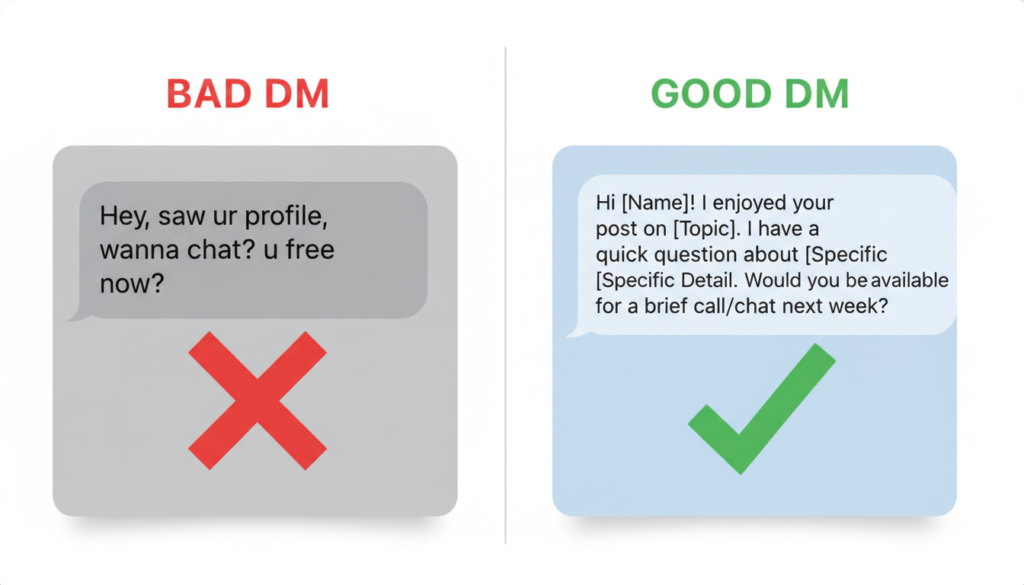
When you finally decide to send that message, keep it short, specific, and low-pressure. Mentors are busy people. They do not have time for a coffee chat with every person who asks. Your goal is to get a reply, not a marriage proposal.
The Anatomy of a Non-Cringe DM
A good DM follows this structure: The Greeting, The Connection, The Specific Question, and The Exit.
Example: “Hi [Name], I have been following your threads on backend architecture for a few weeks- they really helped me understand microservices. I am currently stuck on [Specific Problem] in my latest project. Do you have a favorite resource for learning more about this? Thanks for all the value you provide!”
Notice what is missing? There is no “Can you be my mentor?” or “Can we hop on a 30-minute call?” It is a low-friction question that is easy to answer. If they answer, that is the start of the mentorship.
Transitioning from “Stranger” to “Mentee”
Once you get a reply, do not stop there. The most important part of finding a mentor is the follow-up. If they give you a resource or a piece of advice, go and use it. Then, a week later, message them back and say: “Hey, I read that book you suggested and it changed how I look at [Topic]. I even implemented [Specific Thing] in my project. Thank you!”
This is the ultimate compliment for a mentor. It shows that you are not just a talker; you are a doer. Most people never follow up, so doing this immediately puts you in the top 1% of young tech enthusiasts.
What If They Say No or Ignore You?
Rejection is part of the game. Sometimes people are just busy, or their DMs are flooded. Do not take it personally. If you get ghosted, just keep building in public and engaging with others. There are millions of people in tech. One “no” is just a sign to look elsewhere. Keep your head up and stay consistent.
The Bottom Line
Networking without cringe is just being a curious, respectful human being. You do not need a fancy degree or a job at a FAANG company to start building your network. You just need to show up, do the work, and be helpful to others. Whether you are on LinkedIn or X, the rules are the same: give more than you take, and the mentors will find you. Ready to dive deeper into the world of tech? Check out our Learn More section for more guides on navigating the digital landscape.